Caffeine During Pregnancy: How Much Is Too Much?
By TinySteps Editorial Team · 16 September 2026
Key takeaways
- Current NHS guidance is to have no more than 200mg of caffeine a day during pregnancy.
- That is roughly two mugs of instant coffee, or about two and a half cups of tea but the amount in coffee shop drinks varies a lot.
- Caffeine is not only in coffee: tea, cola, energy drinks, chocolate and some supplements all contain it, and they add up.
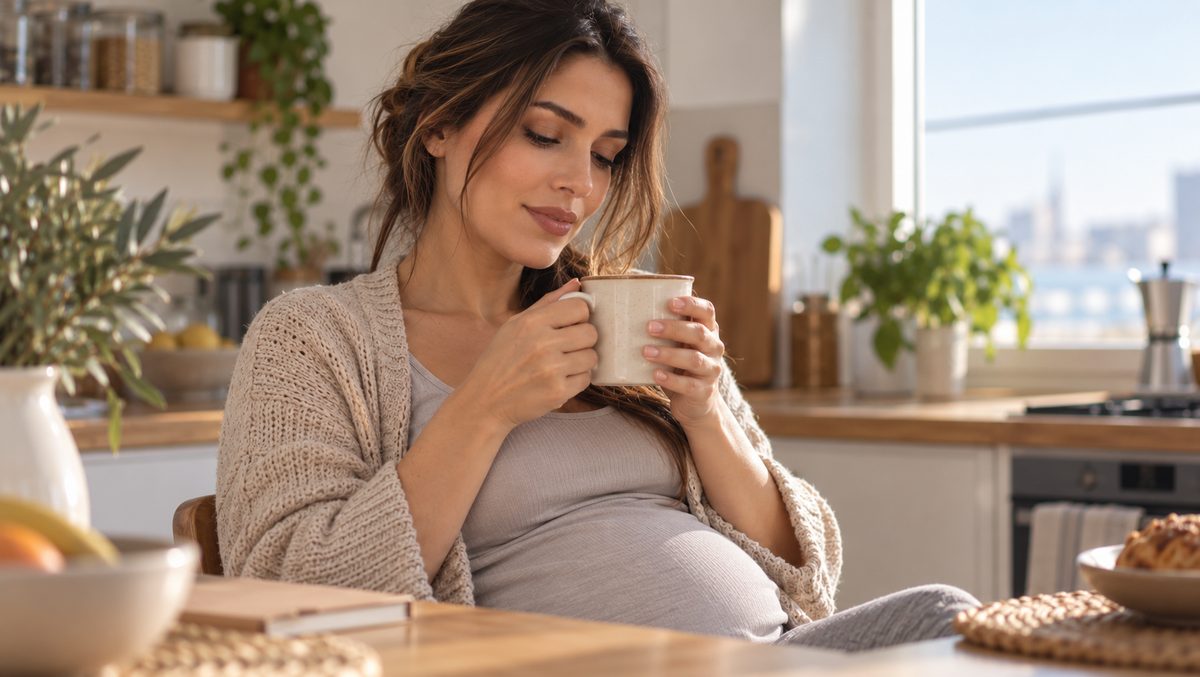
If you have been staring at your morning coffee wondering whether you are allowed it, the short answer is usually yes within a limit. You do not have to give up caffeine entirely during pregnancy, but it is worth knowing roughly how much you are having, because it adds up faster than most people expect.
The number to know
The NHS advises having no more than 200mg of caffeine a day while pregnant.
That limit exists because having too much caffeine in pregnancy has been linked to a higher chance of miscarriage and having a baby with a low birth weight.
Two things are worth saying plainly about that. First, this is guidance about reducing risk across a population, not a prediction about you. Second, if you have already had more than 200mg on some days before you knew you were pregnant, or since that is not something to panic about. Going forward is what you can control.
What 200mg actually looks like
This is where it gets practical. Approximate amounts:
Instant coffee about 100mg per mug
Tea, black or green about 75mg per mug
Cola about 40mg per can
Energy drink about 80mg per 250ml can
Dark chocolate less than 25mg per 50g bar
Milk chocolate under 10mg per 50g bar
So two mugs of instant coffee puts you at roughly the limit for the day. Two cups of tea and a can of cola is around 190mg. A morning coffee and an afternoon energy drink is about 180mg before you count anything else.
One important gap in that list: filter and espresso-based coffee. A coffee shop flat white, latte or filter coffee can contain considerably more caffeine than a mug of instant, and the amount varies between chains and even between branches. If you drink shop-bought coffee, it is worth asking or checking the chain's published nutrition information rather than assuming it matches the figures above.
The sources people forget
Caffeine also turns up in:
Green tea and some herbal blends
Chocolate and chocolate drinks
Guarana, which appears in energy drinks and some supplements
Some cold and flu remedies and painkillers
Some sports and fitness supplements
That last group matters. Always check the label, and check with a pharmacist before taking any medicine or supplement in pregnancy including ones you took comfortably before.
Practical ways to cut down
If you are over the limit and want to reduce, doing it gradually tends to be easier than stopping suddenly, which can bring on headaches and make the tiredness worse.
Switch one drink a day to decaf, then another the following week
Make tea weaker, or take the bag out sooner
Try decaf versions of what you already drink rather than switching to something you dislike
Watch the afternoon top-up it is often the one that tips the total over
Remember that decaf is not caffeine-free, but the amount is small
If tiredness is the reason you are reaching for caffeine, that is worth naming. First-trimester exhaustion is real and does not respond well to coffee anyway.
What to remember
Aim for under 200mg a day. Two mugs of instant coffee is about the whole allowance. Coffee shop drinks can be stronger than you expect, so check rather than guess. And if some days have gone over, adjust from her
e rather than worrying about what is already done.
If you are unsure about your own situation particularly if you have a condition affecting your pregnancy your midwife or doctor can give you advice specific to you.
Your checklist
Sources
Track this in TinySteps
Free for UAE mums - week by week guidance built around your stage.
Try it free